
Patient range
Specify species, minimum and maximum patient sizes, and any particular handling or positioning requirements.
Veterinary operating-room planning
Connect the operating room with the complete patient-care workflow.
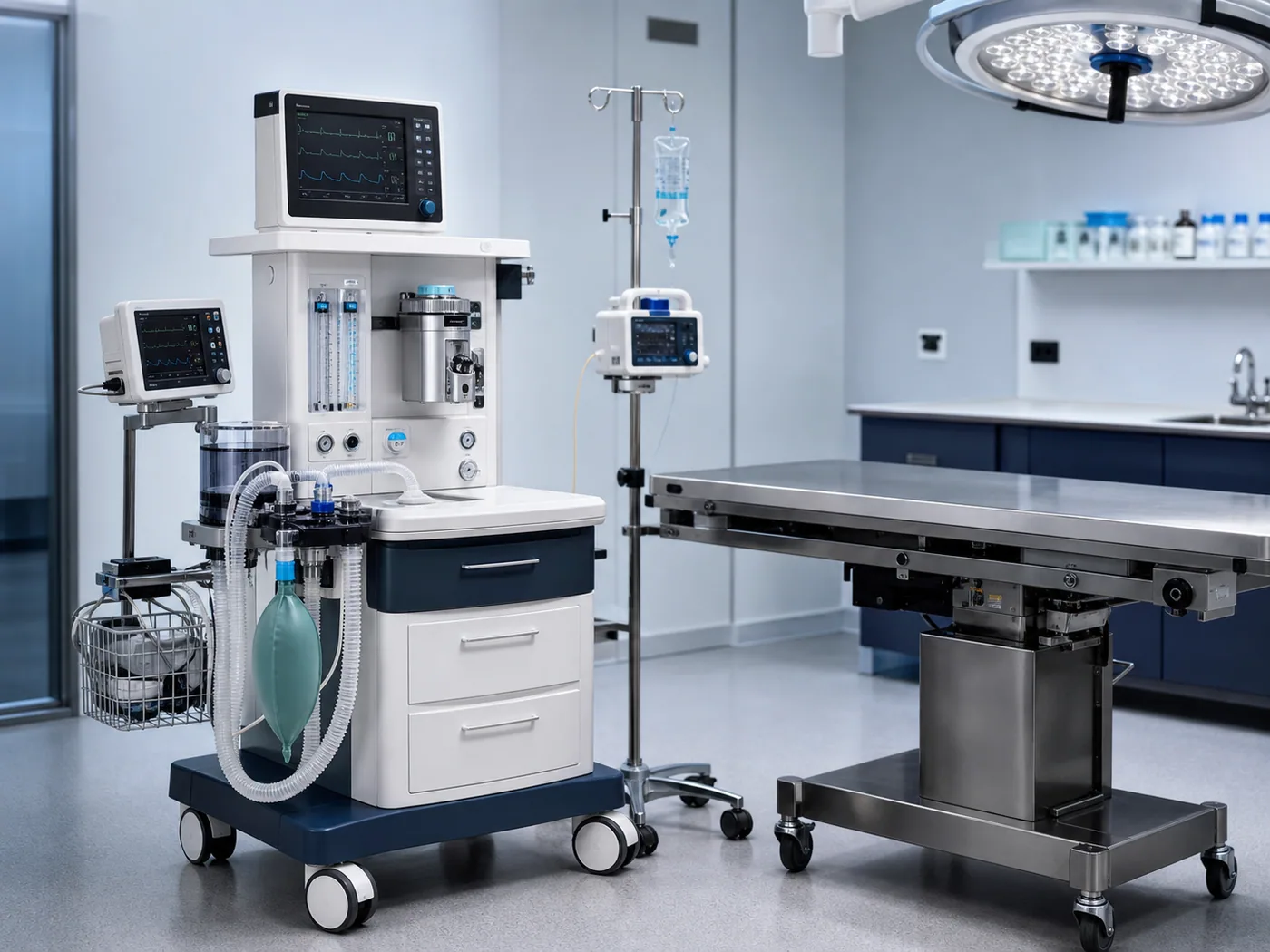
Plan anesthesia, monitoring, infusion, surgical equipment and recovery support around your procedures and patient range. Mevidon helps you define a coordinated equipment list with clear accessories, facility dependencies and delivery scope.
Define your clinical service
For new animal hospitals, clinics adding surgical services and teams upgrading an existing operating room. Start with the intended service and available staff before choosing equipment.
Specify species, minimum and maximum patient sizes, and any particular handling or positioning requirements.
Describe routine and specialist procedures, expected duration, case volume and the number of rooms operating at the same time.
List equipment already in use, gas supply, room dimensions, recovery spaces and staff training requirements.
A connected workflow
Equipment availability should follow the patient from preparation through recovery. Assign trained staff and agree clinical responsibilities at every stage.
Plan examination space, preparation equipment, ready-to-use supplies and access to the team's equipment-check procedures.
Coordinate gas supply, anesthesia delivery, airway accessories, monitoring and patient transfer with the selected systems.
Arrange the table, lighting, instruments, monitoring and infusion equipment so the team can access both patient and controls.
Plan observation space and the monitoring and supportive equipment specified by the clinical team after the procedure.
The preparation-through-recovery approach is described in the AAHA anesthesia and monitoring guidelines for dogs and cats. Clinical protocols and patient-specific settings remain the responsibility of qualified veterinary professionals.
Configuration framework
Use these seven groups as a purchasing discussion framework. They are not a fixed package; the final list follows your clinical requirements and confirmed product availability.
Equipment to consider
Anesthesia machine, selected vaporizer, breathing circuits, reservoir bags and compatible airway accessories.
Explore anesthesia machines →Confirm before purchase
Confirm patient range, agent-specific vaporizer compatibility, gas connections, circuit options and the complete accessory list.
Equipment to consider
A compatible ventilator where required by your clinical service, with the appropriate circuits and connection accessories.
Explore ICU equipment →Confirm before purchase
Confirm supported operating ranges, modes, alarms and system integration for the intended patients. Do not assume every machine includes a ventilator.
Equipment to consider
Monitoring equipment and accessories for the parameters specified by your anesthesia team.
Explore monitoring equipment →Confirm before purchase
Review ECG, oxygen saturation, blood pressure, temperature and capnography requirements. Confirm included modules, sensor sizes and sampling accessories.
Equipment to consider
Infusion pumps, syringe pumps, mounting options and compatible administration supplies.
Explore infusion pumps →Confirm before purchase
Check the intended delivery range, supported sets or syringes, alarms, battery operation and replenishment arrangements.
Equipment to consider
Operating table, surgical lighting, suction and instruments selected for the planned procedures.
Explore equipment categories →Confirm before purchase
Confirm patient positioning, table capacity, working access, cleaning and any electrical or mounting requirements.
Equipment to consider
Orthopedic instruments and implants, endoscopy or dental equipment according to the surgical service.
Explore orthopedic equipment →Confirm before purchase
Define procedures first, then confirm instrument sets, dimensions, accessories, reprocessing requirements and staff training.
Equipment to consider
Observation, monitoring, temperature-support and oxygen-related equipment as required by the recovery plan.
Explore recovery & ICU equipment →Confirm before purchase
Review the number of recovery spaces, visibility, patient access, cleaning and equipment availability between procedures.
Additional procedure needs: veterinary endoscopy, dental equipment and compatible consumables.
Check the interfaces
A collection of suitable products still needs a verified configuration. Identify interfaces and accessories explicitly before approving the order.
Confirm the gas source, connection standards, regulator requirements, vaporizer, circuits and waste-gas handling arrangements.
Match required parameters with included modules, appropriate cuffs and sensors, and any sampling or connecting accessories.
Confirm approved infusion sets, syringe types, mounting hardware, power arrangements and replacement supplies by model.
Check table positioning, device mounts, power, cable routing, cleaning access and the space needed around the patient.
Provide the make and model of existing equipment. Compatibility, patient range and supported functions must be confirmed for the actual configuration; appearance or connector shape alone is insufficient.
Facility readiness
Coordinate equipment requirements with your local installation and facilities team. Identify who supplies, connects and checks each part of the setup.
Phased procurement
Sequence purchases around clinical capability and workflow, with the full requirements of each planned service included.
Define the anesthesia, monitoring, surgical workspace and recovery equipment needed for the procedures planned at opening.
Review room utilization, overlapping cases and equipment availability before adding devices or a second operating space.
Evaluate endoscopy, orthopedic or dental systems against the team's clinical services and training plan.
Budget & ownership
Ask for an itemized equipment schedule with standard and optional items clearly separated. Include recurring supplies and service in your budget discussion.
Send an InquiryWorking with Mevidon
As a veterinary medical equipment manufacturer and one-stop supplier, Mevidon supports configuration and international equipment supply. Confirm the exact project and service scope in writing.
Review procedures, patient range, workload and existing systems.
Agree: an equipment and accessory schedule.Review interfaces, required documentation, options and destination requirements.
Agree: the quotation, exclusions and responsibilities.Confirm the selected configuration, agreed inspection records and packing details.
Agree: the equipment checks and delivery documents.Define equipment-operation guidance, handover, maintenance and fault-reporting arrangements.
Agree: acceptance criteria and service contacts.Confirm on-site availability, travel costs and commissioning separately. Product-operation training does not replace professional clinical training or patient-specific anesthesia planning.
Illustrative planning example
This is an example of equipment planning, not a completed customer installation or a prescribed clinical package.
Procurement FAQs
Questions for hospital owners, veterinary teams and operating-room project buyers.
Start with the procedures and patient range. Discuss anesthesia, monitoring, infusion, table, lighting, suction, surgical instruments and recovery support, then confirm accessories and facility requirements for each selected system.
Do not assume universal suitability. Share your smallest and largest patients, species and procedures. The machine, circuits, ventilation and monitoring accessories must be evaluated together for the intended range.
It depends on the model and quotation. Specify whether ventilation is required and confirm the ventilator, modes, accessories, alarms and compatibility as separate configuration items.
Your clinical team should define the patient and procedure requirements. Confirm the selected circuits, connectors, reservoir bags and airway accessories against the manufacturer's specifications before approving the equipment package.
Ask your anesthesia team to define requirements for oxygenation, ventilation, circulation and temperature. Confirm the exact monitor modules, compatible sensors and consumables; included parameters vary by model.
That depends on the planned fluid and medication-delivery workflows. Compare intended delivery ranges, compatible supplies, channel needs and mounting arrangements with your clinical team before selecting pump types and quantities.
Confirm gas source, connectors, pressure requirements and waste-anesthetic-gas handling against the selected equipment. Have qualified local personnel review installation and workplace requirements; do not assume these are included with the machine.
Mevidon supports coordinated veterinary equipment supply. Share your procedure list and room requirements so the available equipment, standard accessories, optional items and service responsibilities can be defined in an itemized proposal.
Agree equipment-operation training, documentation, setup guidance and fault-reporting arrangements. Confirm warranty terms, spare-parts support, consumable supply and any on-site services in the quotation. Clinical protocol training requires appropriately qualified professionals.
Review a complete configuration schedule before payment. Include circuits, sensors, pumps, mounting items, supplies and facility connections, then separate equipment, freight, installation, training and ongoing service costs.
Start your surgery project
Share the information you have so we can discuss equipment selection and a coordinated quotation.
Email your room plan or equipment list to tuxiaohong63@gmail.com with your project reference.
Related projects: new veterinary hospital planning and diagnostic imaging solutions. Final models and support scope are confirmed in the quotation.