
Test menu & species
List required analytes, patient species and clinical departments. Identify assay limitations and the reference information needed for interpretation.
In-house veterinary diagnostics
Build your laboratory around the results your team needs.
Connect analyzer selection with your test menu, animal species, sample workload and ongoing supplies. Mevidon helps you define equipment, reagents and support requirements in a coordinated laboratory proposal.
Define your starting point
For clinics starting in-house testing, hospitals expanding diagnostic capacity and laboratory project buyers. Decide which results your team needs on site and which tests remain with a reference laboratory.
List required analytes, patient species and clinical departments. Identify assay limitations and the reference information needed for interpretation.
Share average and peak sample numbers, urgent testing needs and available operators. Compare sample-to-report workflow, not instrument run time alone.
Review bench space, sample preparation, storage, waste handling, software and reagent-replenishment arrangements.
A practical procurement decision
Compare specific instruments at your expected workload. Neither format is automatically the best choice for every clinic.
| Planning factor | Dry / unit-use systems | Wet chemistry systems |
|---|---|---|
| Purchasing focus | Confirm the selected rotor, slide or cartridge system and available panels. | Confirm analyzer capabilities, assay menu and compatible liquid reagents. |
| Workload fit | Assess single-sample workflow, run capacity and panel use at your actual volume. | Assess batch or random-access workflow, daily workload and reagent utilization. |
| Reagent cost | Include panel price and unused analytes in the comparison. | Include pack size, calibration, controls, dead volume and open-container stability. |
| Daily operation | Review preparation, loading, storage, maintenance and waste handling. | Review pipetting, reagent handling, water needs where applicable and maintenance. |
| Quality planning | Confirm manufacturer instructions for controls and independent quality assessment. | Confirm calibration, control materials, lot changes and quality-review procedures. |
| Supply continuity | Confirm proprietary supply dependence, shipment conditions and replenishment lead time. | Confirm reagent compatibility and validated alternatives; do not assume an open system. |
From sample to report
Document responsibilities and procedures across collection, testing and reporting. Equipment purchase is one part of a functioning laboratory.
Confirm collection containers, sample type, preparation, volume and handling limits in the relevant instructions.
Plan controls, calibration where required, maintenance logs and actions when checks fail. Have your laboratory lead set and review the quality plan.
Review species-specific validation, reference intervals, result flags and follow-up review procedures before clinical use.
Confirm patient identification, units, reference information, result review and transfer into your hospital or laboratory information system.
Quality planning resources are available in the ASVCP laboratory guidelines. Built-in instrument checks should not be assumed to replace a complete quality-management program.
Supply continuity
Discuss consumables alongside the analyzer, especially where a platform depends on proprietary rotors, cartridges or kits.
Send an InquiryTotal operating cost
Use a consistent time period and test definition across proposals. A panel and an individual analyte are different units of comparison.
Reagents, cartridges, controls, calibrators, sampling supplies and other required consumables.
Repeat runs, expired material, partially used packs and unused panel capacity at your real workload.
Allocated service, maintenance, software, staff time and equipment costs, kept visible in the comparison.
Cost per reportable result = total attributable costs for the period ÷ reportable patient results for that period. Record assumptions about testing volume, repeats, waste and included overhead.
Grow with your workload
Prioritize the agreed test menu, sample preparation, controls and operator training. Keep a defined referral pathway for tests outside your scope.
Use workload and turnaround records to decide whether more capacity, better reporting integration or an additional test service is justified.
Evaluate molecular or other specialist testing with the necessary workflow, staff expertise, assay validation and sustained supplies.
Working with Mevidon
Mevidon is a veterinary medical equipment manufacturer and one-stop supplier. Confirm the following deliverables for your laboratory project.
Discuss test menu, species, sample volume, operator resources and existing instruments.
Agree: the proposed analyzer and supply list.Review assays, accessories, software, documents, reagents, storage and commercial terms.
Agree: inclusions, exclusions and replenishment scope.Confirm bench, utility and environmental requirements, agreed inspection records and shipping arrangements.
Agree: preparation tasks and delivery documents.Define operation guidance, maintenance, service contacts and model-specific warranty arrangements.
Agree: acceptance checks, training and support scope.Clinical validation, quality policies and result interpretation remain with qualified laboratory professionals. On-site service and special shipping conditions require separate confirmation.
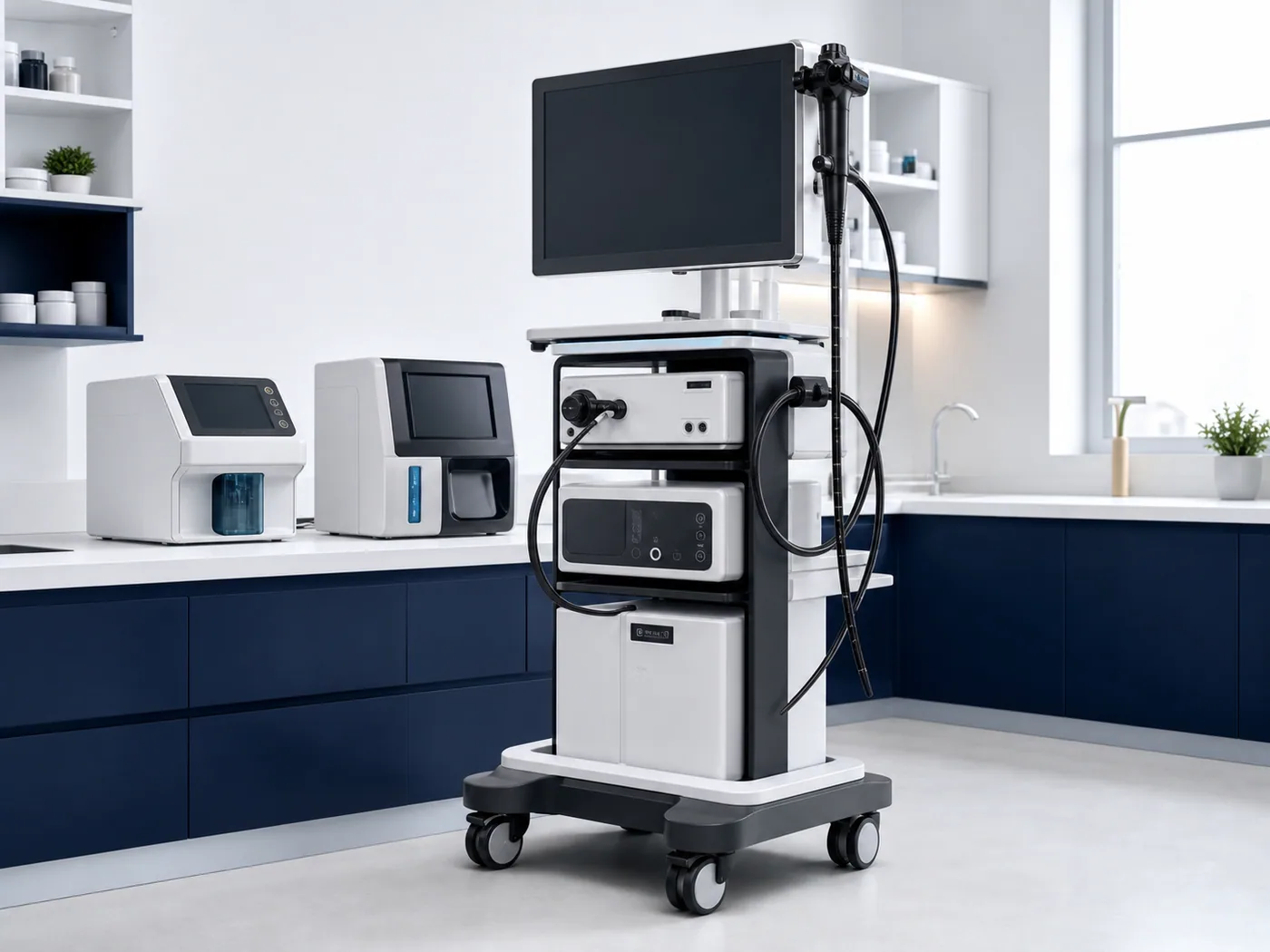
Illustrative planning example
This is a planning example, not a customer installation or a fixed equipment recommendation.
Laboratory procurement FAQs
Answers for clinic owners, laboratory teams and international equipment buyers.
Start with your test menu, species and workload. Discuss hematology, chemistry and urinalysis, then add other systems when the intended service justifies them. Include sample preparation, quality control, storage and reporting.
Compare your actual volume, required analytes, staffing and reagent usage. Evaluate calibration, controls, expiry-related waste and maintenance along with instrument cost. Suitability depends on the specific systems, not the format alone.
Do not assume this. Confirm validation for the intended species and assays, reference information, sample requirements and limitations. A species selection in software does not by itself demonstrate analytical suitability.
The required volume depends on the model and test. Confirm sample type, collection container, aspiration volume, dead volume and preparation requirements from the current instructions for the selected configuration.
Include reagents, controls, calibrators, consumables, repeat runs, discarded expired material and allocated service costs. Divide by reportable patient results for the same period; compare panels and individual tests consistently.
Discuss compatible reagents, controls, calibrators and supplies with the equipment quotation. Confirm available products, order quantities, storage conditions, shelf life at delivery and replenishment terms for your destination.
Do not assume it does. Review what the built-in checks actually assess and develop a documented quality plan with your laboratory lead, following manufacturer instructions and relevant veterinary laboratory guidance.
Integration depends on the analyzer, software version, interface and receiving system. Confirm export formats, interface licenses, patient identification, units and a practical transfer test before agreeing compatibility.
No. Define the assay workflow, including sample preparation or extraction, validated reagents, positive and negative controls, contamination management, trained staff and result interpretation. Confirm all required components before ordering.
Confirm setup guidance, operation training, maintenance instructions and troubleshooting arrangements in the quotation. On-site service, travel, warranty and parts are model- and destination-specific; clinical validation remains with qualified laboratory professionals.
Start your laboratory project
Send the details you already know so we can discuss an equipment and supply proposal.
Email your test menu or equipment list to tuxiaohong63@gmail.com with your project reference.
Planning multiple departments? Explore our new veterinary hospital solution. Final models, documents and support scope are confirmed in the quotation.