
Short answer
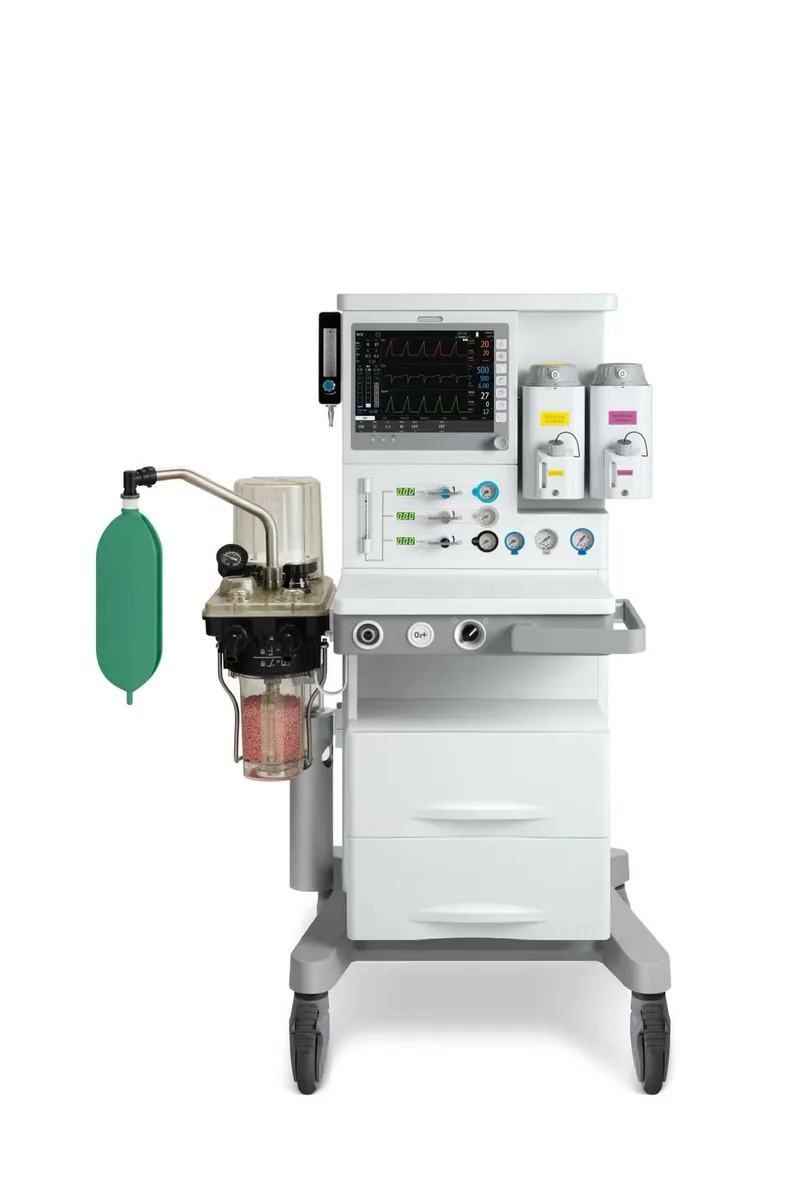
Choose a veterinary anesthesia machine as part of a complete anesthesia system: gas supply, vaporizer, breathing circuit, patient ventilation, waste-gas scavenging, monitoring, airway equipment, checks, training and maintenance. Begin with the smallest and largest patients, procedure mix and room workflow. Then specify every included circuit, bag, hose, connector, vaporizer and safety feature. AAHA guidance treats anesthesia as a continuum of care supported by prepared equipment, trained personnel and continuous monitoring; a machine alone does not make anesthesia safe.
Editorial note: This independent procurement guide was prepared from Mevidon's supplied product materials and the primary professional or government sources listed below. It contains no paid rankings and does not replace clinical, engineering or regulatory advice.
Quick comparison
| Configuration | Compact / non-rebreathing focus | Mixed-practice workstation | Advanced ventilated workstation |
|---|---|---|---|
| Typical role | Small patients or mobile use | Routine small-animal surgery | Higher-acuity or specialist work |
| Breathing system | Non-rebreathing emphasis | Rebreathing plus options | Multiple circuits and ventilation |
| Ventilation | Manual or separate | Optional or model dependent | Integrated or specified |
| Monitoring | Separate monitor commonly required | Separate or mounted monitor | Integrated workflow; modules still specified |
| Primary decision | Low resistance and mobility | Versatility and serviceability | Control, integration and training |
Which patients and procedures must the system support?
Record the smallest and largest patient, common species, procedure types, expected duration, emergency load and whether the system moves between rooms. Patient size affects breathing resistance, circuit volume, bag size, sensor selection and ventilation requirements. Dental, soft-tissue, orthopedic, imaging and exotic-animal workflows can place different demands on access and monitoring.
Separate routine needs from specialist expansion. Ask the clinical lead to approve the use profile, and ask each supplier to map the proposed configuration to it in writing.
How do rebreathing and non-rebreathing circuits differ?
Rebreathing circuits use one-way valves and a carbon-dioxide absorber so some exhaled gas can be reused. Non-rebreathing circuits generally have lower resistance and less apparatus dead space, which can be important for small patients, but they require an appropriate fresh-gas flow and waste-gas pathway. AAHA notes that non-rebreathing circuits are commonly used for cats and small dogs below roughly 3 to 5 kg, while final selection remains a clinical decision.
Specify every circuit, bag, absorber canister, hose and connector by size and quantity. Confirm the changeover method, pressure-relief design and leak-test procedure. Accessories described as standard in one market may be optional in another.
What should be checked in the gas-delivery system?
Define cylinder or central pipeline supply, gas types, connector standards, regulators, pressure indicators, flowmeter range, oxygen flush and low-supply behavior. Confirm vaporizer mounting, agent compatibility, filling system and calibration arrangements for the destination market. Do not assume a vaporizer is included with the base machine.
The installation and daily checklist should cover supply pressure, leaks, flowmeters, vaporizer level and seating, circuit integrity, absorber status, valves, bags, scavenging and emergency oxygen. Training must match the delivered configuration.
When is a ventilator required?
Mechanical ventilation may be needed when a patient cannot maintain adequate ventilation or when a procedure, positioning or clinical condition calls for controlled ventilation. The responsible veterinarian determines when and how it is used. For procurement, specify patient size range, ventilation modes, pressure and volume ranges, alarms, fresh-gas dependence, manual override and how the ventilator connects to the breathing system.
An integrated ventilator can simplify the workstation, while a separate unit may offer flexibility or service independence. Evaluate setup time, cleaning, alarm visibility, battery backup and behavior during power or gas interruption.
Which patient-monitoring parameters belong in the project?
AAHA guidance emphasizes continuous physiologic monitoring and support across anesthesia and recovery. A procurement brief commonly considers ECG, blood pressure, oxygen saturation, end-tidal carbon dioxide, respiratory rate and temperature, with parameters selected by the clinical team. Sensor sizes, sampling lines, cuffs, mounts, batteries and consumables must fit veterinary patients.
A monitor does not replace a dedicated, trained observer. Define alarm settings, trend storage, anesthesia-record workflow, cleaning and sensor replacement. Test the full patient pathway, including recovery, where continued monitoring can be especially important.
Why is waste-gas scavenging a core requirement?
Waste anesthetic gases can leak from circuits, connections, masks and recovering patients. CDC/NIOSH identifies veterinary personnel among exposed workers and states that modern control technology can reduce exposure. An effective scavenging system, ventilation, leak prevention, maintenance and appropriate work practices should be designed together according to local occupational-safety requirements.
Specify passive, active or adsorption arrangements only after reviewing the room and gas supply. Confirm compatible interfaces, pressure relief, exhaust destination, canister handling if used and a maintenance or monitoring plan. Surgical masks do not control anesthetic gas exposure.
How should maintenance and after-sales support be evaluated?
Anesthesia equipment needs routine inspection, leak testing, cleaning and preventive maintenance. Ask who services the machine, vaporizer, ventilator and monitor; how calibration is documented; which seals, valves, sensors and batteries are stocked; and what response is available after a failure. Keep operator and service manuals accessible to the team.
Compare total ownership cost across the main machine, vaporizers, circuits, ventilator, monitor, gas and scavenging infrastructure, installation, training, consumables, calibration, preventive maintenance and shipping. The safest choice is the supported configuration your team can check and operate consistently.
Copy this buyer checklist
- What are the smallest and largest patients?
- Which rebreathing and non-rebreathing circuits are required?
- Which gas supply and connector standards apply locally?
- Which vaporizer, agent and filling system are included?
- Is mechanical ventilation required now or as an upgrade?
- Which monitors, sensors and consumables fit the patient range?
- How will waste gas be captured and removed?
- Who performs installation, training, calibration and service?
Buyer FAQs
What should a veterinary anesthesia machine include?
The exact package varies, but buyers should define gas supply, flowmeters, vaporizer, breathing circuits, bags, absorber, scavenging interface, ventilation if needed, patient monitoring and all connectors and accessories.
Do small animals need a different breathing circuit?
Small patients may benefit from a low-resistance, low-dead-space non-rebreathing circuit. AAHA notes common use in cats and small dogs below approximately 3 to 5 kg. The clinical team selects the circuit for each patient.
Is a ventilator always required?
No. Need depends on patient, procedure and clinical protocol. A buyer should decide whether manual ventilation, an upgrade path or an integrated ventilator fits the service.
Why does an anesthesia machine need scavenging?
Scavenging collects and removes excess anesthetic gas to help control occupational exposure. It must be paired with suitable ventilation, leak prevention, maintenance and work practices.
Sources and further reading
Primary sources were accessed and checked on July 19, 2026.
- AAHA: 2020 Anesthesia and Monitoring Guidelines for Dogs and CatsFrames anesthesia as a continuum of care supported by trained staff, equipment, monitoring and checklists.
- AAHA: Equipment PreparationCovers preparation of the machine, breathing circuit, airway equipment and patient monitors.
- CDC/NIOSH: Anesthetic Gases and Reproductive HealthExplains waste anesthetic gas exposure routes and the role of effective scavenging and maintenance.
Important procurement note
This guide is educational and does not replace clinical, engineering, radiation-safety, occupational-safety, regulatory or facility advice. Product capability and compliance depend on the final model and market. Confirm the signed specification, included accessories, local requirements, installation scope and service plan before purchase.